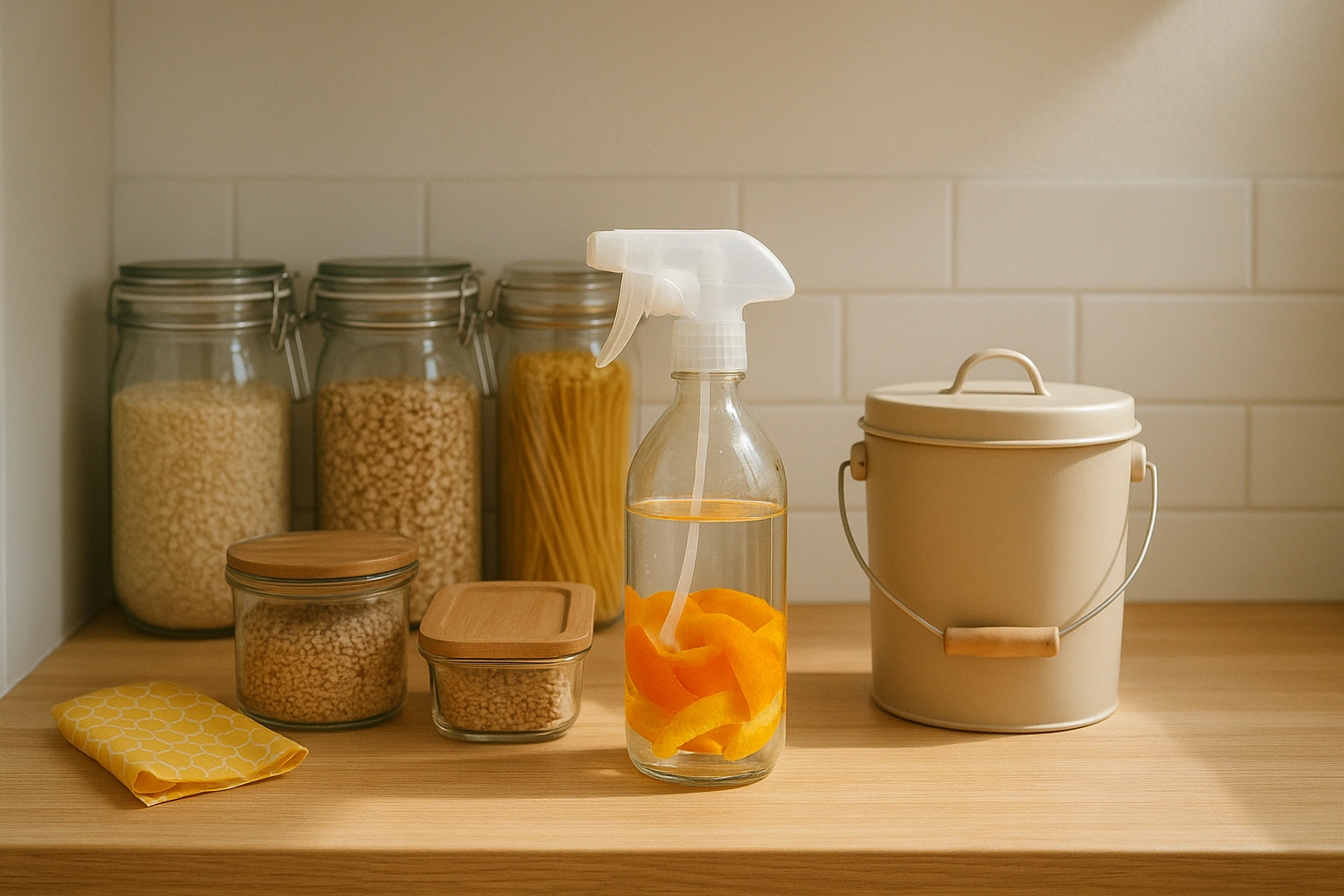
What Are Zero-Waste Kitchen Hacks?
Zero waste kitchen hacks are clever, practical strategies for significantly reducing the trash generated from cooking and eating. It’s not about being perfect; using zero waste kitchen hacks encourages a mindset of resourcefulness. These zero waste kitchen hacks help you rethink everything from grocery shopping to storing leftovers and cleaning your counters. By applying zero waste kitchen hacks, even small homes can benefit from multi-purpose items and natural decluttering.
The urgency is clear. According to the EPA, food is the single largest category of material placed in municipal landfills in the United States. By implementing a few simple changes, you can directly combat this staggering statistic from your own home.

Why Zero Waste Kitchen Hacks Matter for Your Home
Transforming your kitchen into a low-waste hub with zero waste kitchen hacks offers benefits that extend far beyond just a smaller trash bag. Using zero waste kitchen hacks can save money, reduce food waste, and make your cooking space healthier. These zero waste kitchen hacks also help you stay organized and maximize small kitchen spaces. By applying zero waste kitchen hacks consistently, your kitchen can become both efficient and eco-friendly.
Slash Your Grocery Bill
When you focus on preventing food waste, using zero waste kitchen hacks helps you stop throwing money in the bin. These zero waste kitchen hacks encourage smarter grocery shopping and portioning. By applying zero waste kitchen hacks, you make better use of every ingredient. Consistently practicing zero waste kitchen hacks turns simple habits into a more efficient and sustainable kitchen routine.
- Using every part of your produce: Turning vegetable scraps into broth or carrot tops into pesto.
- Buying in bulk: Paying for the product, not the packaging, which is often cheaper per ounce.
- Proper food storage: Making fresh food last longer, reducing spoilage.
For more financial wellness tips, you might find valuable information at Academic Scholarships.
Create a Healthier, Toxin-Free Cooking Space
Many conventional kitchen products, from plastic containers to chemical cleaners, can leach harmful substances. Using zero waste kitchen hacks, you can choose safer storage and cleaning solutions. These zero waste kitchen hacks guide you to focus on glass, stainless steel, and silicone instead of plastic. By applying zero waste kitchen hacks, you also learn to use natural cleaners and maintain a healthier kitchen environment. Consistently practicing zero waste kitchen hacks makes everyday cooking safer and more sustainable.
- Inert storage materials: Using glass, stainless steel, and silicone instead of plastic.
- Natural cleaning agents: Swapping harsh chemicals for simple, effective cleaners like vinegar and baking soda.
- Whole foods: Focusing on fresh, unprocessed ingredients from bulk bins and farmers’ markets.
Simplify Your Kitchen and Reduce Clutter
A low-waste kitchen is often a minimalist kitchen. By eliminating single-use items and focusing on multi-purpose tools, you free up an incredible amount of cabinet and counter space—a precious commodity in any urban home.
The Ultimate Zero-Waste Kitchen Hacks
Smart Shopping & Storage Hacks
- Create a “Jar Library”: Start saving glass jars of all sizes. They are perfect for storing everything from spices to grains to leftovers. Keep them on an open shelf for easy access and a rustic aesthetic.
- Bring Your Own Bags (for Everything): This goes beyond the main tote. Get a set of small, lightweight cloth bags for produce and bulk bin items to avoid using the thin plastic ones at the store.
- Shop with a List, and Stick to It: Impulse buys often come with extra packaging and lead to food waste. A clear plan is your best defense.
Food Preservation & Waste Reduction Hacks
- The “Scrap Bag” for Broth: Keep a large bag or container in your freezer for vegetable scraps—onion peels, carrot ends, celery bottoms, herb stems. Once it’s full, simmer with water for a few hours to make a delicious, free vegetable broth.
- Regrow Your Greens: Don’t toss the root ends of scallions, leeks, or romaine lettuce. Place them in a shallow dish of water on your windowsill, and they will regrow for a second harvest.
- Revive Wilted Veggies: Leafy greens and herbs looking a little sad? Shock them in a bowl of ice water for 15-30 minutes to bring them back to life.
Sustainable Cleaning Hacks
- The All-Purpose Cleaner: Fill a spray bottle with a 1:1 ratio of white vinegar and water. Add a few drops of essential oil or some citrus peels for a fresh scent. It works on countertops, sinks, and floors.
- DIY Garbage Disposal Refreshers: Freeze leftover lemon or lime wedges in an ice cube tray with vinegar. Pop one down the drain and run the disposal for a quick clean and deodorize.
- The Un-Paper Towel: Cut up old t-shirts or towels to create a stash of reusable cleaning cloths. Keep a small bin under the sink for the dirty ones.

Comparison: Low-Waste Food Storage Options
| Method | Pros | Cons | Best For |
|---|---|---|---|
| Glass Jars | Durable, non-toxic, free (if reused), see-through. | Heavy, breakable, can be bulky. | Pantry staples, leftovers, liquids. |
| Beeswax Wraps | Lightweight, pliable, compostable, space-saving. | Not for raw meat, can’t use hot water, wears out. | Covering bowls, wrapping sandwiches, cheese. |
| Silicone Bags | Very durable, freezer/microwave safe, leak-proof. | Higher initial cost, can be hard to clean/dry. | Freezing food, snacks, sous vide. |
Expert Tips for a Thriving Eco-Kitchen
We asked experts for their top advice.
“The most overlooked zero-waste tool is a sharp knife. When you can dice an onion finely or peel a carrot thinly, you waste less of the vegetable. Good knife skills are sustainable skills.”
– Chef Lena Ortiz, author of “The Conscious Cook”
- Implement FIFO: Use the “First In, First Out” method for your pantry and fridge. When you bring home new groceries, move the older items to the front so you use them first.
- Designate an “Eat Me First” Bin: Keep a small box or basket in your fridge for produce or leftovers that are close to their expiration. This visual cue helps you prioritize what to eat.
- Learn to Pickle: Quick pickling is an incredibly easy way to preserve vegetables that are about to go bad. A simple brine of vinegar, water, salt, and sugar can extend the life of cucumbers, carrots, and onions by weeks.
Frequently Asked Questions (FAQ)
Q: How can I store food without plastic in a small kitchen?
A: Focus on reusable containers you already own, like glass jars from pasta sauce or pickles. Beeswax wraps are a great, space-saving alternative to plastic wrap for covering bowls or wrapping sandwiches. For freezer storage, consider silicone bags which are durable and reusable.
Q: What is the most effective way to reduce food waste?
A: The most effective method is to conduct a ‘food waste audit’ for one week. Keep a small notebook in your kitchen and jot down everything you throw away. This will reveal your patterns—perhaps you’re buying too much bread or letting fresh herbs wilt. Once you know your main sources of waste, you can target them effectively.
Q: Are DIY cleaners as effective as store-bought ones?
A: For most daily cleaning, yes. A simple solution of equal parts white vinegar and water is a fantastic all-purpose cleaner and disinfectant. Baking soda is a powerful, non-abrasive scrub for sinks and stovetops. While some specialized tasks might require a commercial product, DIY cleaners can handle over 90% of your kitchen cleaning needs safely and cheaply.