
What If You Could Garden Without Soil?
For many urban dwellers, the dream of a garden is crushed by a lack of space and good soil. This guide will introduce you to the world of **hydroponic urban gardening**, a soil-free method that is perfect for small indoor spaces. You will learn how these systems work, why they are so sustainable, and how you can set up your very own futuristic farm right in your living room.
What is Hydroponic Urban Gardening?
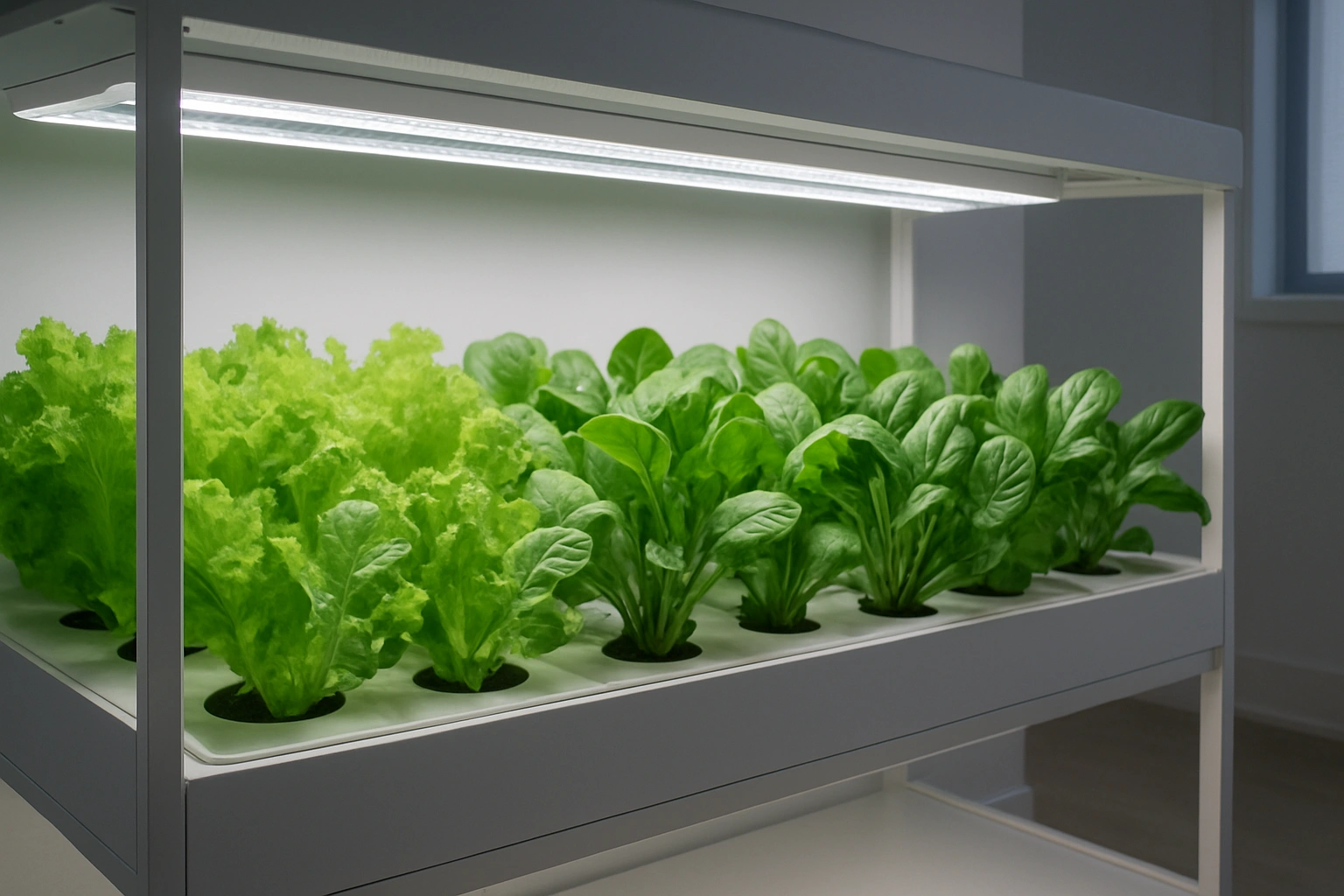
Hydroponic urban gardening is a method of growing plants without soil, using a mineral nutrient solution to feed them directly. In hydroponic urban gardening, roots are supported by an inert medium like perlite, rockwool, or clay pellets instead of dirt. Hydroponic urban gardening allows plants to receive exactly what they need for optimal growth. This approach makes hydroponic urban gardening a precise, efficient, and clean way to cultivate fresh produce in any space.
This technology is at the forefront of sustainable urban agriculture. With the global population becoming increasingly urbanized, hydroponics offers a way to grow fresh food year-round, right where people live. The global hydroponics market is projected to reach nearly $70 billion by 2028, according to a report by Statista. This explosive growth signals a major shift toward soil-free farming as a solution for urban food deserts and sustainable living.
Why Hydroponics is a Sustainable Superpower
Growing without soil isn’t just a novelty; it comes with profound environmental and practical benefits.
Incredible Water Savings
Hydroponic systems are typically closed-loop, meaning the water is recirculated and reused. This results in 80-90% less water consumption compared to soil-based agriculture, where much of the water evaporates or runs off. This is a crucial advantage in a world facing increasing water scarcity.
Faster Growth and Higher Yields
By delivering nutrients directly to the roots in a highly absorbable form, hydroponics allows plants to grow up to 25% faster and produce up to 30% more than the same plants grown in soil. Plants don’t have to waste energy developing extensive root systems to search for nutrients. This research was famously pioneered by NASA for growing food in space.
No Weeds, Fewer Pests, and No Herbicides
One of the biggest advantages of **indoor hydroponics small spaces** is the clean environment. With no soil, there are no soil-borne pests, diseases, or weeds. This means you can grow produce without the need for pesticides or herbicides, resulting in cleaner, healthier food. This focus on innovative solutions is a valuable skill in any field, including academia, where resources like Academic Scholarships can support further learning.
How Hydroponic Systems Work
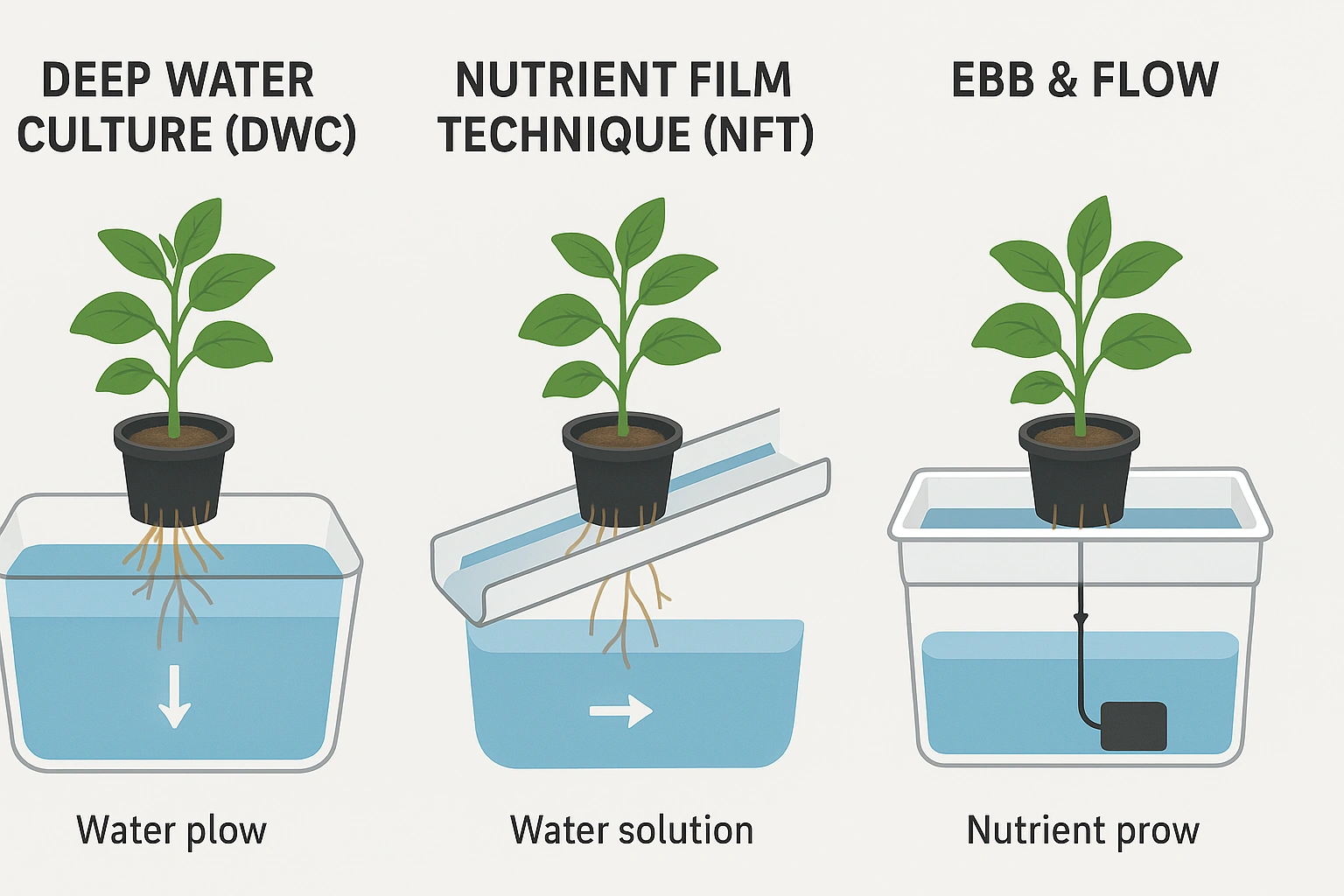
There are several types of hydroponic systems, but they all share the same basic principle: delivering nutrient-rich water to plant roots. Here are three popular methods for beginners.
1. Deep Water Culture (DWC)
This is one of the simplest systems. Plants are placed in net pots that sit in a lid over a reservoir of nutrient solution. The roots hang down directly into the water. An air pump with an air stone (like in a fish tank) is used to oxygenate the water and prevent the roots from drowning.
2. Nutrient Film Technique (NFT)
In an NFT system, plants are placed in a sloped channel or tube. A continuous, thin film of nutrient solution flows down the channel, flowing over the tips of the plant roots. This provides a constant supply of nutrients, water, and oxygen.
3. Ebb and Flow (Flood and Drain)
This system uses a grow bed filled with a growing medium like clay pellets. A timer controls a pump that temporarily floods the grow bed with nutrient solution from a reservoir below. After a few minutes, the solution drains back into the reservoir, pulling fresh oxygen down to the roots.
Which Hydroponic System is Right for You?
Choosing a system depends on your space, budget, and what you want to grow.
| System | Complexity | Pros | Cons | Best For |
|---|---|---|---|---|
| Deep Water Culture (DWC) | Very Low | Easy to build, inexpensive, fast growth. | Pump failure can be catastrophic; water temp can be hard to manage. | Beginners, leafy greens, herbs. |
| Nutrient Film (NFT) | Medium | Highly scalable, water efficient, great for vertical setups. | Pump failure is critical; roots can clog channels. | Lightweight plants like lettuce and strawberries. |
| Ebb and Flow | Medium | Versatile, excellent oxygenation for roots. | Requires a timer; can be noisy. | A wide variety of plants, including some root vegetables. |
Common Hydroponic Mistakes to Avoid
Hydroponics is precise, which means small mistakes can have big consequences.
- Ignoring pH Levels: The pH of your nutrient solution determines if plants can absorb nutrients. If it’s too high or too low, your plants will starve even if nutrients are present. You must test and adjust your pH regularly (aim for 5.5-6.5).
- Nutrient Burn: More is not better. Using too much nutrient concentrate can “burn” your plants, causing curled, brown leaf tips. Always start with a half-strength solution and increase gradually.
- Inadequate Lighting: A sunny window is rarely enough for productive hydroponics. You need a full-spectrum LED grow light to provide the intense, consistent light that fruiting plants require.
- Poor Oxygenation: Stagnant water is a death sentence for roots. Ensure your DWC system has a powerful air pump or that your other systems have proper flow and drainage cycles to provide oxygen.
Expert Tips for Hydroponic Success
“Your two most important tools in hydroponics aren’t your pump or your lights—they’re your pH meter and your EC meter. pH unlocks the door for nutrients, and EC tells you how much food is in the water. Master those two measurements, and you’ve mastered 90% of hydroponics.”
— Dr. Evelyn Reed, Controlled Environment Agriculture Researcher
- Start with Lettuce: It’s the most forgiving hydroponic crop. It grows fast, tolerates minor fluctuations, and will give you the confidence to try other plants.
- Keep it Clean: Sanitize your system between plantings to prevent algae and bacterial growth.
- Change Your Reservoir: Completely drain and replace your nutrient solution every 1-2 weeks to prevent nutrient imbalances and salt buildup.
Frequently Asked Questions
Q: Is hydroponics difficult for beginners?
A: It can seem intimidating, but many simple systems are perfect for beginners. A basic Deep Water Culture (DWC) or Kratky method setup is very easy to start with. The key is to start small, choose easy plants like lettuce, and learn the basics of nutrient and pH management.
Q: What are the best plants for indoor hydroponics in small spaces?
A: The best plants are those that are compact and grow quickly. Leafy greens (lettuce, spinach, kale), herbs (basil, mint, parsley), and strawberries are all excellent choices for beginners and small indoor systems.
Q: Does hydroponic urban gardening require a lot of electricity?
A: It depends on the system. A simple Kratky system requires no electricity at all. Other systems need a small air pump or water pump, which use minimal energy. The biggest energy consumer is the grow light, but modern LED lights are highly energy-efficient.
Grow the Future in Your Home
By understanding the basics of hydroponic urban gardening and starting with a simple setup, you can explore the full potential of hydroponic urban gardening. Hydroponic urban gardening opens doors to efficient, soil-free growth even in small apartments. Embrace hydroponic urban gardening and enjoy fresh produce year-round. With hydroponic urban gardening, even compact spaces become thriving gardens full of life and flavor.